
Building a Governance-Driven Vulnerability Management Program from Scratch

Table Of Content
- Building a Vulnerability Management Program from Scratch 🔐
- 📌 Why Vulnerability Management Matters
- 🏗 Project Objective
- 📜 Phase 1: Policy Draft Creation
- 🔍 Phase 2: Vulnerability Identification
- ⚖️ Phase 3: Risk Classification & Prioritization
- Severity Framework
- 🛠 Phase 4: Remediation & Validation
- 📊 Results: Measurable Risk Reduction
- 📈 Governance & Reporting Enhancements
- 🎯 Strategic Takeaways
- 1️⃣ Governance Precedes Technology
- 2️⃣ Risk Prioritization Prevents Alert Fatigue
- 3️⃣ Metrics Drive Executive Support
- 4️⃣ Continuous Improvement Is Critical
- 💼 Why This Project Matters for GRC Roles
- 🔭 Future Enhancements
- 🧠 Final Thoughts
- 📥 Download the Executive Summary Report
Building a Vulnerability Management Program from Scratch 🔐
A practical walkthrough of designing and implementing a policy-driven Vulnerability Management Program - from drafting governance standards to achieving measurable risk reduction in a simulated enterprise environment.
📌 Why Vulnerability Management Matters
Organizations cannot secure what they do not continuously assess.
A formal Vulnerability Management Program (VMP) provides structured governance around:
- Identifying system weaknesses
- Prioritizing risk based on business impact
- Enforcing remediation timelines
- Reporting measurable security posture improvements
In this project, I designed and implemented a policy-driven vulnerability management framework from the ground up - simulating a real-world enterprise environment.
This was not just a scanning exercise.
It was a governance-first security initiative.
🏗 Project Objective
The goal was to transition a mid-sized organization from:
❌ No formal vulnerability governance
to
✅ A structured, repeatable, SLA-driven vulnerability lifecycle
The program focused on five core pillars:
- Policy Development
- Stakeholder Buy-In
- Risk-Based Prioritization
- Remediation Accountability
- Continuous Monitoring & Reporting
📜 Phase 1: Policy Draft Creation
The foundation of the program began with drafting a formal:
Vulnerability Management Policy
The policy defined:
- Scope of assets covered
- Roles & responsibilities
- Severity classification standards
- Remediation SLAs
- Exception handling procedures
- Reporting cadence
🔎 Key Insight:
Security programs fail when accountability is unclear.
The policy ensured remediation ownership was formally assigned to asset owners - not just the security team.
🔍 Phase 2: Vulnerability Identification
Authenticated scans were conducted across:
- Servers
- Network devices
- Endpoints
- Critical infrastructure components
Findings included:
- Outdated software versions
- Weak configurations
- Privileged accounts with unnecessary exposure
- Missing security patches
This phase established a baseline risk posture.
⚖️ Phase 3: Risk Classification & Prioritization
Vulnerabilities were classified using:
- CVSS scoring
- Exploitability
- Business criticality
- Exposure level
Severity Framework
| Severity | Definition | SLA |
|---|---|---|
| 🔴 Critical | Immediate business risk | 7 days |
| 🟠 High | Significant exposure | 14 days |
| 🟡 Medium | Moderate risk | 30 days |
| 🟢 Low | Minimal risk | Maintenance cycle |
This risk-based approach ensured remediation efforts aligned with business impact, not just scanner output.
🛠 Phase 4: Remediation & Validation
Remediation required cross-functional coordination between:
- Security Governance
- IT Operations
- Asset Owners
- Management (for escalation support)
After remediation efforts:
- Follow-up scans validated fixes
- Exceptions were formally documented
- Risk acceptance required management approval
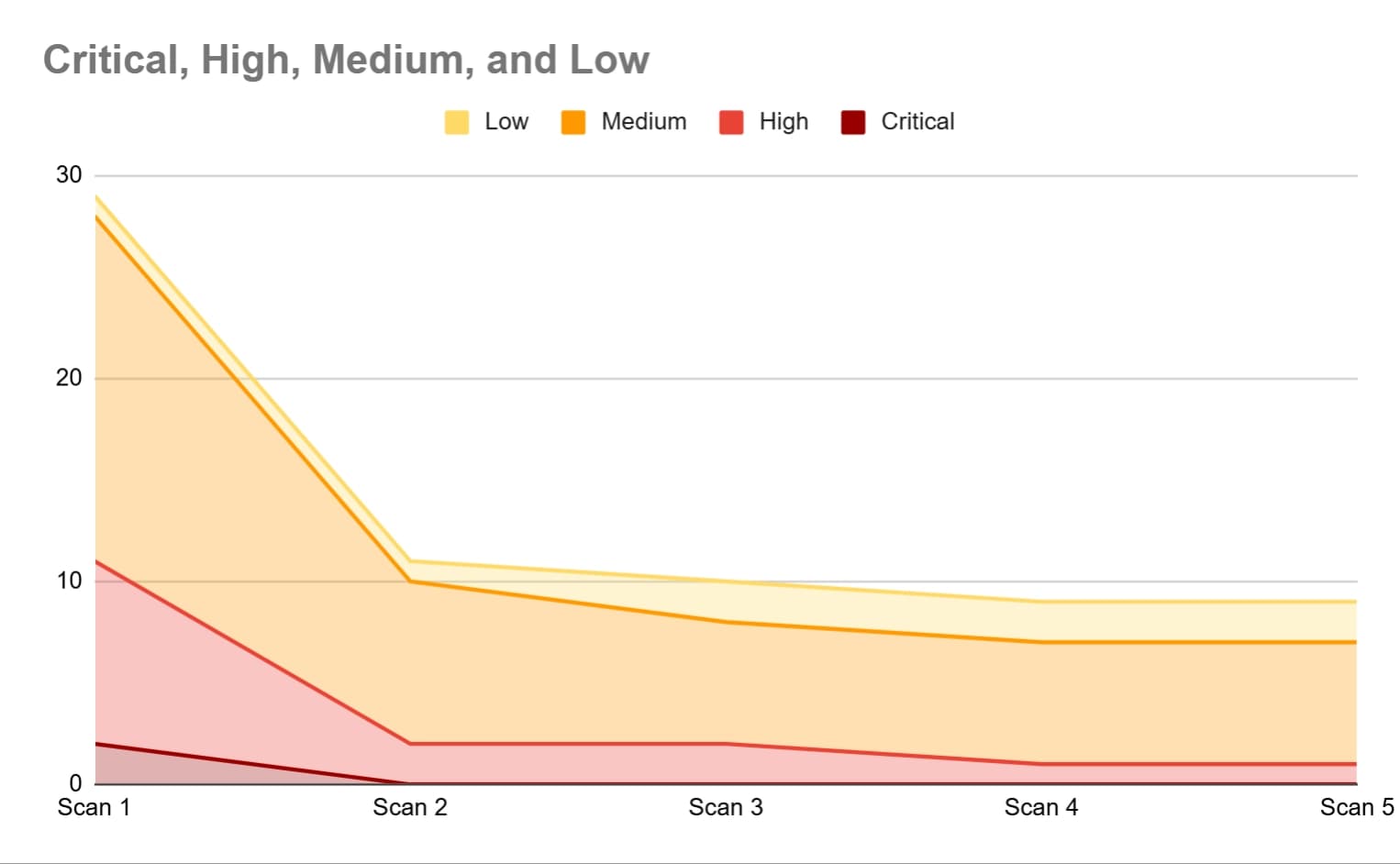
📊 Results: Measurable Risk Reduction
The simulated implementation produced:
- ✅ 100% of Critical vulnerabilities remediated
- 📉 ~90% reduction in High severity findings
- 📉 ~70% overall vulnerability count reduction
- 📈 Improved SLA compliance tracking
The most important takeaway:
Risk visibility improved as much as risk reduction.
Executives could now see trends, exposure levels, and remediation performance.
📈 Governance & Reporting Enhancements
The program transitioned into “Maintenance Mode” with:
- Monthly scanning cadence
- Quarterly executive reporting
- MTTR (Mean Time to Remediate) tracking
- SLA compliance dashboards
- Annual policy review cycle
This elevated the initiative from a technical task to a sustainable risk management program.
🎯 Strategic Takeaways
This project reinforced several important lessons:
1️⃣ Governance Precedes Technology
Tools do not create security - policy and accountability do.
2️⃣ Risk Prioritization Prevents Alert Fatigue
Not every vulnerability requires the same urgency.
3️⃣ Metrics Drive Executive Support
When leadership sees measurable improvement, security becomes strategic.
4️⃣ Continuous Improvement Is Critical
Vulnerability management is a lifecycle - not a one-time cleanup effort.
💼 Why This Project Matters for GRC Roles
This initiative demonstrates capability in:
- Policy drafting
- Control design
- Cross-functional stakeholder engagement
- SLA governance
- Risk reporting
- Security lifecycle management
It bridges technical vulnerability assessment with enterprise risk governance - aligning directly with:
- IT Risk Analyst roles
- GRC Analyst roles
- Technology Risk Consultant positions
- Security Governance functions
🔭 Future Enhancements
Next evolution areas include:
- Integration with enterprise risk register
- Automation of SLA tracking
- Cloud-native asset coverage
- KPI dashboards for executive reporting
- Integration with Incident Response workflows
🧠 Final Thoughts
Vulnerability management is not about scanning tools.
It is about building:
- Structured governance
- Clear ownership
- Measurable accountability
- Continuous visibility
Security maturity begins with disciplined risk management - and this project reflects that philosophy.
📥 Download the Executive Summary Report
👉 Vulnerability Management Program Report (PDF)
🔗 Full report and supporting files available on GitHub
Thanks for reading! 🙏
If you're interested in security governance, GRC frameworks, or enterprise risk programs - feel free to connect with me on LinkedIn.
Feel free to reach out with questions or thoughts.